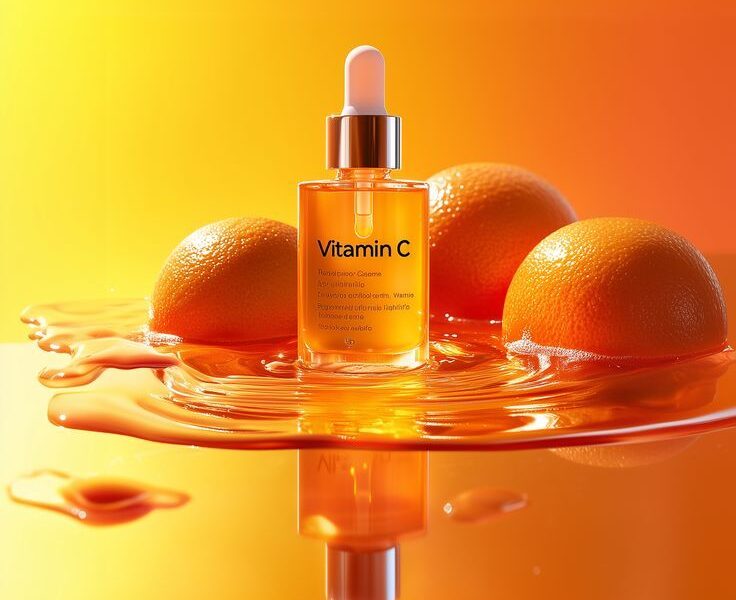
Vitamin C is one of the most popular and powerful antioxidants in skincare, known for its ability to brighten the complexion, fight free radical damage, and slow down the signs of aging. It is naturally found in citrus fruits and leafy vegetables, but when applied topically, Vitamin C works directly on the skin to improve tone, texture, and radiance. Its most celebrated benefit is its ability to fade dark spots and pigmentation by inhibiting excess melanin production, which makes it a go-to ingredient for those struggling with uneven skin tone, acne marks, or sunspots. With consistent use, Vitamin C leaves the skin looking clearer, brighter, and more luminous. Beyond its brightening effects, it also plays a key role in stimulating collagen production, helping the skin stay firm and reducing the appearance of fine lines and wrinkles over time. This makes it not only a glow-enhancing ingredient but also a long-term anti-aging solution.
As a potent antioxidant, Vitamin C protects the skin from environmental stressors like UV rays and pollution, which are major contributors to premature aging. While it does not replace sunscreen, using Vitamin C in the morning under SPF provides an added layer of defense against damage caused by free radicals. In addition, its anti-inflammatory properties help calm redness and irritation, making it beneficial for acne-prone or sensitive skin when used in the right concentration. Vitamin C is typically available in different forms, with L-ascorbic acid being the purest and most potent. However, L-ascorbic acid can be unstable and degrade when exposed to light, heat, or air, which is why many modern skincare products use stabilized derivatives like sodium ascorbyl phosphate, magnesium ascorbyl phosphate, or ascorbyl glucoside. These forms are gentler and more stable, though slightly less potent, making them suitable for beginners or sensitive skin types.
When it comes to usage, Vitamin C works best in concentrations of 10–20%, depending on skin tolerance. Beginners may start with 5–10% for a gradual introduction, while higher strengths deliver more visible results for pigmentation and aging concerns. It can be found in serums, creams, and even toners, but serums are considered the most effective since they deliver Vitamin C in a concentrated form directly to the skin. For best results, it is usually applied in the morning after cleansing and before sunscreen, although it can also be used at night depending on personal preference. Because Vitamin C can sometimes cause mild tingling, redness, or sensitivity, it is wise to patch test first and introduce it slowly into a routine.
Vitamin C pairs well with many other ingredients. It works synergistically with Vitamin E and ferulic acid, which boost its stability and antioxidant power, creating one of the most effective combinations for protection and repair. It can also be layered with hyaluronic acid for hydration and niacinamide for brightening, though some people prefer to use them at different times of the day. Retinol and Vitamin C can be used together too, but usually in separate routines (Vitamin C in the morning, Retinol at night) to avoid irritation and maximize their benefits.
Overall, Vitamin C is a multitasking skincare ingredient that delivers visible results when used consistently. It brightens dullness, reduces dark spots, supports collagen, protects against environmental damage, and leaves the skin looking radiant and youthful. While it requires proper formulation and storage to remain effective, when used correctly it can transform the skin and is considered a must-have in modern skincare routines.